
Tariffs Are Disrupting China’s Supply Chain: Insights and Implications
In recent years, the global economy has faced unprecedented challenges, particularly in the realm of international trade. One of the most significant factors influencing this landscape has been the imposition of tariffs, particularly by the United States on Chinese goods. The implications of these tariffs extend far beyond mere price increases; they are reshaping supply chains, altering business strategies, and revealing the fragility of China’s economic structure. This article delves into the current state of China’s supply chain, the impact of tariffs, and what this means for businesses operating in the United States and abroad.
Understanding the Impact of Tariffs on China’s Economy
Tariffs, essentially taxes levied on imported goods, have been a central theme in U.S.-China trade relations. As of 2024, approximately 14.7% of China’s total exports were directed to the United States. While this figure might seem manageable at first glance, a deeper analysis reveals a troubling trend: a significant shift in production has already occurred. During the first Trump administration, numerous Chinese factories were compelled to relocate parts of their operations to countries like Vietnam, Mexico, and Thailand, not out of preference, but out of necessity to survive the tariffs.
This shift has resulted in a complex web of trade practices that obscure the reality of China’s export economy. For instance, many Chinese products are now being processed in third countries before reaching the U.S. market, which further complicates the statistics. When considering these indirect routes, it becomes evident that the U.S. market still absorbs about 22% to 25% of the value of all goods China exports, translating to roughly one export dollar for every four dollars shipped out.
The Fragility of China’s Manufacturing Sector
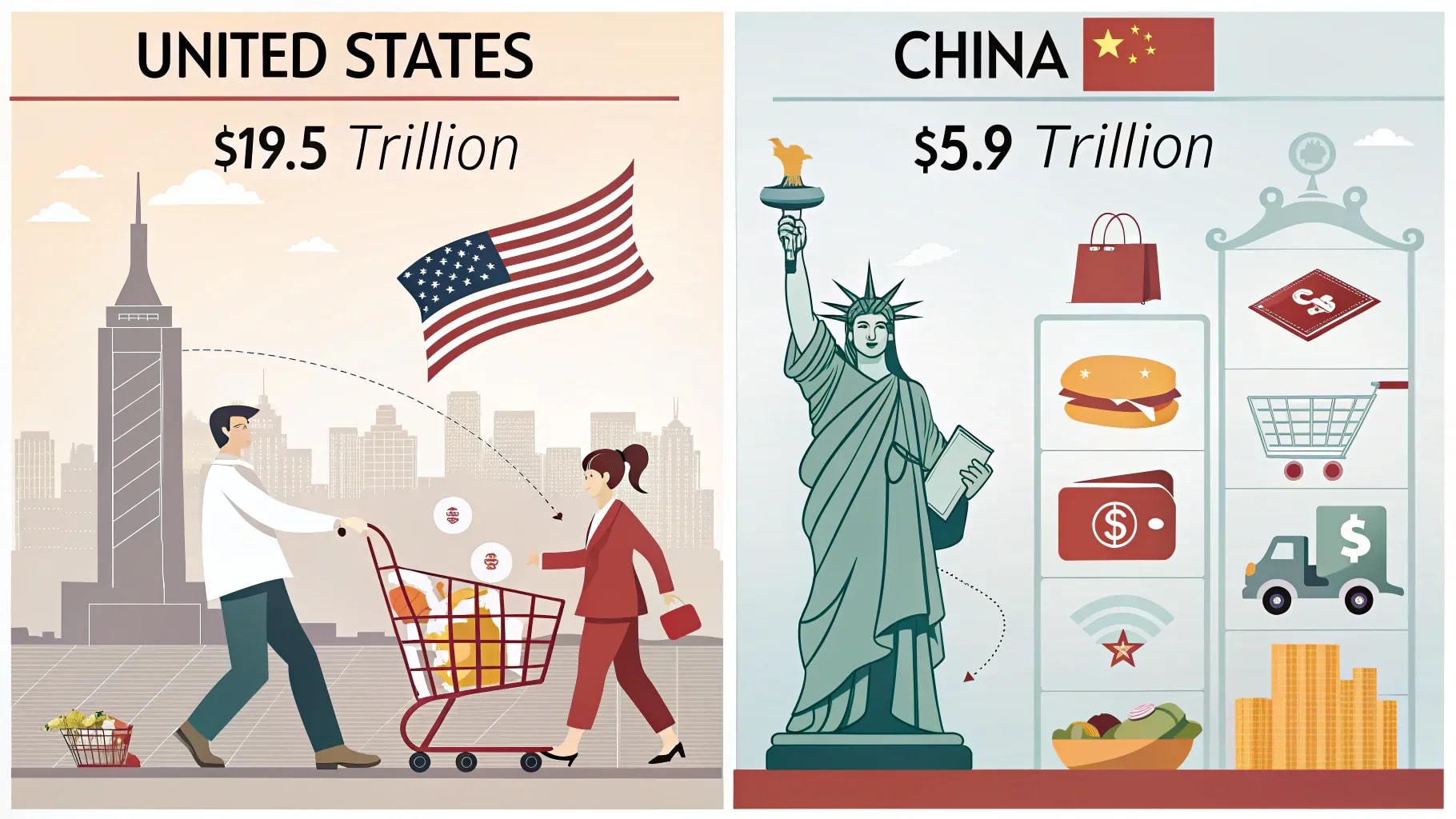
The notion that China can easily replace lost U.S. demand with domestic consumption is misleading. While it is true that China has a vast population, the economic behavior of its consumers differs fundamentally from that of Americans. The United States, with a consumer spending capacity of approximately $19.5 trillion annually, dwarfs China’s projected consumption of around $5.9 trillion. This disparity highlights a critical issue: American consumers spend significantly more, with estimates suggesting they consume three times more than their Chinese counterparts.
This cultural difference in spending behavior has severe implications for Chinese manufacturers who have lost substantial U.S. business. Many are now scrambling to pivot towards domestic sales, but the demand simply isn’t there to fill the void left by lost exports. This creates a ripple effect of panic throughout the supply chain, as factories struggle to maintain operations amidst dwindling orders. For example, upstream suppliers who rely on export orders are reporting significant decreases in demand, leading to a cascade of layoffs and factory closures.
Economic Consequences of Tariff Measures
As tariffs continue to exert pressure on China’s manufacturing sector, the consequences are becoming increasingly dire. Container prices have reached all-time lows, indicating a surplus of goods in warehouses. Factory workers are being sent home, orders are piling up, and inventory levels are rising. In an attempt to survive, some factories are resorting to extreme measures, including selling goods at drastically reduced prices, sometimes as low as one yuan per kilogram. This desperation is not limited to a few factories; it is a widespread issue affecting entire regions, particularly those heavily reliant on U.S. orders.
Regions like Guangdong, Zhejiang, and Jiangsu are particularly vulnerable, with many factories depending on U.S. orders for a substantial portion of their revenue—often between 50% to 80%. A sudden drop in U.S. orders can decimate their profit margins, leading to a swift and devastating impact on their operations. In crowded industries such as textiles and electronics, factories typically operate on razor-thin profit margins, making them ill-equipped to absorb additional costs imposed by tariffs.
The Shift in Global Supply Chains
As American businesses grapple with the implications of these tariffs, many are actively seeking alternatives to Chinese suppliers. This shift is not merely a trend; it is a necessary strategy for survival in an increasingly volatile trade environment. Countries like Vietnam, India, and Mexico are experiencing a surge in new factories aimed at meeting the demands of American companies that are diversifying their supply chains.
For instance, tech giants like Apple have already begun moving a significant portion of their production to India, with plans to shift the majority of iPhone manufacturing outside of China by 2026. This move is emblematic of a broader trend among multinational corporations that are reevaluating their reliance on Chinese manufacturing. As companies like Nike, Adidas, and Hasbro also explore new manufacturing hubs, it becomes clear that the landscape of global trade is shifting dramatically.
The Role of Consumer Confidence
While the financial implications of tariffs are significant, the erosion of consumer confidence in China poses an even greater threat. Youth unemployment rates in China are alarmingly high, with official figures suggesting around 15% to 20%. However, the true numbers may be even higher, as the government has ceased measuring certain demographics. This lack of job opportunities is leading to a generation of graduates who are disillusioned and unwilling to engage in the job market.
The economic ramifications of low consumer confidence are profound. As capital flows out of the country and foreign direct investment dwindles, China’s real estate sector—an essential driver of its GDP—is facing a deep crisis. The government’s attempts to double down on strategic isolation, including tightening controls and banning foreign firms from certain sectors, may provide short-term stability but ultimately undermine the investment and innovation needed for sustainable growth.
Long-Term Implications for China and the U.S.
The consequences of these developments extend beyond immediate financial losses. Analysts predict that rather than experiencing a dramatic collapse, China’s economy may endure years of stagnation akin to Japan’s economic malaise in the 1990s. This slow erosion of growth could lead to social unrest, fueled by layoffs and rising inequality, as citizens grapple with the realities of a faltering economy.
For American businesses, the hard truth is that many are already feeling the effects of these changes. Small sellers reliant on Chinese manufacturing are facing significant challenges, with some forced to lay off staff and search for alternative production options. Yet, moving production is not a simple or quick process; it often takes years to establish new manufacturing relationships and build the necessary infrastructure in alternative countries.
Challenges of Transitioning Supply Chains
Countries like Vietnam and India, while attractive alternatives, are currently experiencing capacity issues that make it difficult to absorb the massive volume of goods that China has traditionally handled. Additionally, for critical products—particularly in electronics—the dependence on Chinese infrastructure remains high. Ports, trucking, and raw material supply chains are intricately linked to China’s manufacturing capabilities, creating further complications for any attempts to shift production.
As the situation evolves, one of the most pressing questions remains: who can endure these challenges longer? The U.S. may have the edge, as American businesses have the flexibility to seek alternative suppliers. However, the reality is that costs will inevitably rise, leading to inflationary pressures that will affect consumers across the board.
Conclusion: Navigating the Future of Global Trade
The current landscape of global trade is fraught with uncertainty, particularly as tariffs continue to reshape the dynamics between the United States and China. The ramifications of these policies are far-reaching, affecting not only the companies involved but also the broader economic stability of both nations. As businesses adapt to these changes, the importance of diversifying supply chains and exploring new markets will become paramount.
In summary, the interplay between tariffs, consumer behavior, and manufacturing capabilities paints a complex picture of an evolving global economy. While the challenges are significant, there are also opportunities for businesses willing to innovate and adapt. The next decade will be critical in determining how these shifts will play out and what the future holds for both American and Chinese economies.
Frequently Asked Questions
What are the primary impacts of tariffs on China’s economy?
Tariffs have led to a significant decrease in U.S. orders for Chinese goods, prompting many factories to shift operations to other countries. This has created instability in China’s manufacturing sector, leading to layoffs and factory closures.
How are American businesses responding to these changes?
Many American companies are diversifying their supply chains by moving production to countries like Vietnam, India, and Mexico to mitigate the risks associated with tariffs and reliance on Chinese suppliers.
What does the future hold for China’s economy?
Analysts predict that China may experience years of stagnation rather than a dramatic collapse, with potential social unrest and declining consumer confidence as key challenges.
Why is consumer behavior different between Americans and Chinese?
Americans tend to spend more and are accustomed to using credit, while Chinese consumers typically prioritize savings. This cultural difference in spending behavior significantly impacts economic recovery efforts in China.
What strategies can businesses adopt to navigate this new landscape?
Businesses should focus on diversifying their supply chains, exploring alternative manufacturing hubs, and adapting their strategies to remain competitive in an evolving global market.